TL;DR:
- Transparent SEO reporting involves honest context, clear attribution, and plain-language explanations linking campaign activity to business results. It relies on narrative commentary, multiple attribution models, conversion linkage, integrated dashboards, and timeline annotations to foster client trust and improve campaign decisions. Consistent, goal-aligned reports that clearly communicate progress and setbacks help build credibility, reduce churn, and support smarter budget approval.
SEO reporting transparency is defined as the practice of presenting SEO data with honest context, clear attribution, and plain-language explanation that directly connects campaign activity to measurable business outcomes. It goes beyond sharing raw numbers from Google Search Console or Google Analytics. Transparent reporting tells clients and stakeholders why metrics changed, what those changes mean for revenue, and what decisions should follow. For SEO professionals and business owners alike, this practice is the difference between a client who renews confidently and one who quietly starts shopping for a new agency.

What is SEO reporting transparency and why does it matter?
SEO reporting transparency is the standard of disclosing not just what happened in a campaign, but why it happened and what it means for business performance. A report that shows a 15% increase in organic impressions without explaining whether that translated into leads or sales is not transparent. It is a data dump. True transparency connects Google Search Console visibility data to conversion outcomes, explains ranking fluctuations in plain English, and acknowledges setbacks alongside wins.
The importance of SEO transparency compounds over time. Clients who understand their data make faster decisions, approve budget increases with less friction, and stay longer. Modern SEO reports highlight only relevant, client-aligned results to maintain credibility and actionability, rather than cataloging every available metric. That shift from exhaustive data catalogs to focused data storytelling is what separates agencies that retain clients from those that constantly replace them.
Transparent reporting also protects you when results dip. Algorithm updates, site migrations, and seasonal shifts all affect organic performance. A client who has been receiving honest, contextualized reports throughout a campaign will interpret a traffic drop very differently than one who has only ever seen upward-trending graphs.
What key elements make SEO reporting transparent and effective?
Effective transparent reporting is built from several specific components working together. Each one addresses a different way that standard reports mislead or confuse.
- Narrative commentary: Every significant metric change needs a plain-English explanation. Adding text commentary to SEO dashboards reduces client confusion by explaining why changes occurred, such as a site cleanup or a content push, rather than just showing the delta. Without this, clients fill the silence with their own (often wrong) interpretations.
- Multiple attribution models: Reporting only last-click attribution systematically undercredits organic search. Comparing attribution models, including last-click, data-driven, and assisted conversions, reveals how SEO influences the full customer journey and gives you the data to defend budget allocations honestly.
- Conversion linkage: Rankings and impressions are visibility metrics. They matter only when connected to on-site outcomes. Transparent reports show the path from keyword ranking to click to lead or sale.
- Integrated dashboards: Tools like AgencyAnalytics pull real-time data from Google Search Console, Google Analytics, Semrush, and Ahrefs into a single view. This removes the risk of cherry-picking favorable data from isolated platforms.
- Annotations and timeline context: Annotations that mark events such as site deploys and content pushes enhance traceability and prevent later confusion about traffic shifts.
Pro Tip: Set up a shared, live dashboard for every client from day one. When clients can see data in real time, they stop treating monthly reports as the only moment of truth, and conversations shift from “what happened?” to “what should we do next?”
Here is a quick reference for the core elements of a transparent SEO report:
| Report Element | What it provides |
|---|---|
| Narrative commentary | Plain-English explanation of metric changes and their causes |
| Multiple attribution views | Honest picture of SEO’s role across the full conversion path |
| Conversion linkage | Connection between visibility metrics and revenue outcomes |
| Integrated data sources | Single view from Google Search Console, Analytics, and rank trackers |
| Timeline annotations | Context for traffic shifts tied to site events or algorithm updates |
How does SEO reporting transparency build client trust and improve campaign performance?
Trust in an SEO engagement is built or destroyed in the reporting layer. Clients cannot see the technical work happening on their site. They cannot watch content being published or backlinks being earned. What they can see is the report you send them. That report is your relationship.
Clients trust agencies more when reports include both upside progress and downside monitoring. Reporting a ranking drop with a clear explanation and a recovery plan signals competence. Hiding it until the client notices signals the opposite. The agencies with the lowest churn rates are not the ones with the best results every month. They are the ones whose clients always know exactly where things stand.
Transparent reporting also improves campaign performance directly. When clients understand which SEO activities are driving assisted conversions, they approve the budget needed to scale those activities. Surfacing assisted conversions in reports gives business owners the evidence they need to justify SEO spend to stakeholders who only track last-click revenue. This creates a feedback loop: better reporting leads to better budget decisions, which leads to better results, which makes future reporting easier.
Pro Tip: When a ranking drops, send a brief note before the monthly report arrives. A two-sentence email saying “We saw a dip in rankings for [keyword] this week, here is why and here is our response” builds more trust than any polished report delivered three weeks later.
Clear reporting also prevents the most common source of client conflict: the gap between SEO visibility metrics and business impact. A client who sees their rankings improve but their phone not ringing will lose confidence fast. Transparent reports close that gap by showing the full picture, including where the conversion funnel is working and where it needs attention.
What are common challenges and pitfalls in maintaining SEO reporting transparency?
Even experienced SEO professionals fall into patterns that undermine transparency. Recognizing these pitfalls is the first step to avoiding them.
-
Metric theater. Reporting rankings or impressions without conversion context creates the illusion of progress. Connecting rankings to first-party funnel data from Google Search Console prevents misrepresenting SEO ROI. A page ranking in position three for a high-volume keyword that drives zero conversions is not a win worth celebrating in isolation.
-
Single-model attribution. Last-click attribution assigns 100% of conversion credit to the final touchpoint before purchase. For most businesses, organic search plays a significant role earlier in the journey. Reporting only last-click data makes SEO look less valuable than it actually is.
-
Data overload. Pulling every available metric from Google Analytics, Semrush, Ahrefs, and Google Search Console into one report overwhelms clients and buries the insights that matter. The goal is signal, not volume.
-
Missing annotations. A sudden traffic drop in November means nothing without context. Was it a Google algorithm update? A site migration? A server issue? Timeline annotations in reports prevent debates over metric shifts by linking data changes to real events.
-
AI and privacy tracking gaps. Post-2023 privacy changes and the rise of AI-generated search results have created new measurement blind spots. Reports must clarify what is being measured versus what is not in AI-driven search contexts, including AI Overviews and LLM citations, to manage client expectations accurately.
Pro Tip: Create a one-page “report legend” for new clients that defines every metric you track and explains what it does and does not measure. This single document eliminates 80% of the confusion that leads to trust erosion over time.
What practical steps and tools can SEO professionals use to enhance reporting transparency?
Implementing transparent reporting is a process, not a one-time fix. These steps give you a repeatable framework.
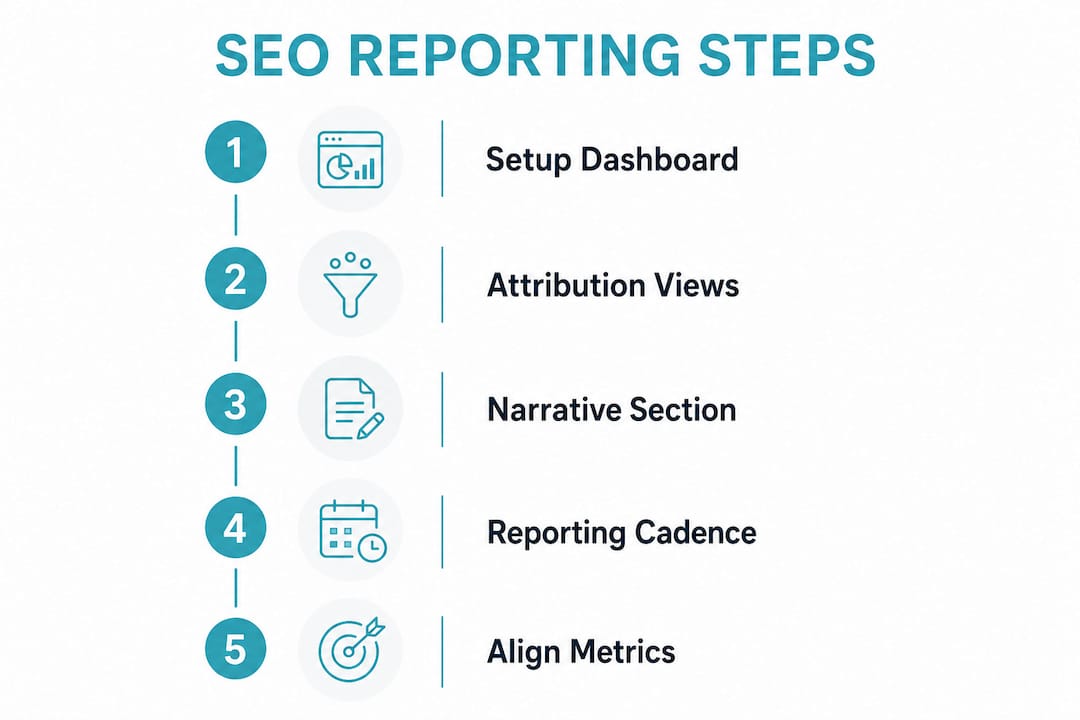
Build an integrated dashboard first. Connect Google Search Console, Google Analytics, and your rank tracker (Semrush or Ahrefs) into a single reporting environment. AgencyAnalytics is purpose-built for this. The goal is one source of truth that pulls data automatically, so you spend time interpreting rather than compiling.
Apply multiple attribution views in every report. Show last-click, data-driven, and assisted conversion data side by side. This is not about confusing clients. It is about giving them an honest picture of how SEO contributes across the full buying journey. Multiple attribution views surface assisted conversions that last-click models miss entirely.
Write a narrative section for every report. This does not need to be long. Three to five sentences explaining what changed, why it changed, and what you plan to do about it transforms a data report into a strategic document. Data storytelling that surfaces results shaping upcoming strategy maintains credibility far better than a metrics catalog.
Set a consistent reporting cadence. Monthly SEO reports allow clients to see meaningful trends without overwhelming them with data. A 30-day rhythm also creates natural checkpoints for surfacing wins and flagging issues before they become problems. For local service businesses, a monthly reporting cadence tied to specific business goals keeps reporting relevant and focused.
Align every metric to a client goal. Before building a report, ask: what does this client actually care about? A local plumber cares about calls and form submissions, not domain authority. An e-commerce brand cares about revenue per session. Aligning your SEO audit checklist and reporting metrics to those specific goals makes every report feel relevant rather than generic.
Here is a comparison of reporting approaches to illustrate the difference transparency makes:
| Reporting approach | What clients see | Business outcome |
|---|---|---|
| Data dump (all metrics) | Confusing volume with no clear story | Client disengagement, churn risk |
| Vanity metrics only | Rankings and impressions without conversion data | Misaligned expectations, budget disputes |
| Transparent storytelling | Contextualized data tied to leads, revenue, and goals | Stronger trust, faster budget approvals, lower churn |
Pro Tip: Before sending any report, read it as if you are the client. If you cannot answer “so what does this mean for my business?” in 30 seconds, rewrite the narrative section until you can.
Key takeaways
Transparent SEO reporting requires honest attribution, plain-language narrative, and direct linkage between visibility metrics and business outcomes to build lasting client trust and drive smarter campaign decisions.
| Point | Details |
|---|---|
| Define transparency clearly | Transparent reporting connects SEO activity to leads, sales, and revenue, not just rankings. |
| Use multiple attribution models | Last-click alone undercredits organic search; always surface assisted conversions. |
| Add narrative to every report | Plain-English commentary explaining metric changes prevents client confusion and builds trust. |
| Annotate your timeline | Mark site events and algorithm updates so traffic shifts always have context. |
| Match metrics to client goals | Report what the client cares about, not every available data point. |
Why transparency is the hardest and most valuable SEO skill
Most SEO professionals are comfortable with technical audits, keyword research, and content strategy. Transparent reporting is harder because it requires a different kind of honesty. You have to explain why a campaign is underperforming before the client asks. You have to show data that makes your work look less impressive in the short term to build credibility in the long term.
The shift I have seen in high-performing agencies is a move away from metric overload toward what I would call strategic storytelling. The best reports I have reviewed do not show everything. They show the three or four data points that matter most to that specific client’s goals, explain them clearly, and lay out the next 30 days of action. That is it.
Attribution honesty is where most agencies still fail. Reporting only last-click conversions to a client whose buyers research for weeks before purchasing is not just misleading. It actively undermines your ability to defend your budget at renewal time. When you show assisted conversion data from the start, you build a case for SEO’s value that holds up even in months where direct conversions are flat.
The emerging challenge is AI visibility. As ChatGPT, Perplexity, and Gemini become primary discovery channels for many buyers, AI visibility measurement must be part of what transparent reporting covers. Clients are starting to ask whether their business shows up when someone asks an AI for a recommendation. If your reports do not address that question, you are leaving a trust gap that a competitor will eventually fill.
The practical advice I give every SEO professional: treat your reporting as a product, not an afterthought. The quality of your reports determines whether clients believe the work is working, regardless of the actual results.
— Cole
See transparent SEO reporting in action with Trystellor
If you are ready to move from disconnected data to clear, client-ready reporting, Trystellor brings Google Search Console, Analytics, backlink data, and AI visibility tracking into one platform. You get weekly technical audits, 30 SEO-optimized articles per month, a 4,000-site backlink network, and LLM citation tracking across ChatGPT, Claude, Perplexity, and Gemini. Every component feeds your reporting with real data, not guesswork.
Trystellor’s AI visibility reports show exactly where your business is being cited by AI answer engines and where competitors are winning instead. That is the kind of transparent SEO performance data that makes budget conversations straightforward. Start a 3-day free trial at trystellor.com with no credit card required and see what your reporting has been missing.
FAQ
What is SEO reporting transparency?
SEO reporting transparency is the practice of presenting SEO data with honest context, clear attribution, and plain-language explanation that connects campaign activity directly to business outcomes like leads and revenue.
Why is transparency important in SEO reports?
Transparent reporting builds client trust by explaining both wins and setbacks, reducing churn and supporting smarter budget decisions. Clients who understand their data renew contracts and approve budget increases with far less friction.
What metrics should a transparent SEO report include?
A transparent SEO report should include organic traffic, keyword rankings, impressions from Google Search Console, assisted and last-click conversions from Google Analytics, and a plain-English narrative explaining what changed and why.
How do attribution models affect SEO reporting transparency?
Last-click attribution undercredits organic search by ignoring its role earlier in the buyer journey. Reporting multiple attribution views, including assisted conversions, gives a more accurate and honest picture of SEO’s business impact.
How often should SEO reports be sent to clients?
Monthly reports give clients enough data to see meaningful trends without overwhelming them. A 30-day cadence also creates a natural rhythm for surfacing wins and addressing issues before they become client concerns.